(2) Role in times of disaster Disaster prevention performance of TOKYO SKYTREE
03
It will continue to function as a radio tower even in the event of a major disaster
Disaster prevention performance of TOKYO SKYTREE
During disasters such as earthquakes and typhoons, information becomes a vital lifeline. Therefore, the tower is designed to be highly resistant to disasters, ensuring it can continue to function as a radio tower even during major disasters.
-
Consideration for flood damage
To ensure functionality is maintained even in the event of flooding caused by heavy rain, critical equipment is installed on the second floor or higher.
-
Ensuring the reliability of lifeline supply
For things like electricity, we have two routes in place so that if one becomes unusable due to a disaster, the other can compensate.
-
Independence for the required period
Furthermore, even if the power supply is cut off due to an unforeseen disaster, the tower can continue to function as a radio tower thanks to its emergency generators and fuel reserves (two routes).
Furthermore, TOKYO SKYTREE TOKYO SKYTREE TOWN stands, also functions as a temporary evacuation center and a water storage tank for daily life, firefighting, and drinking water, to assist residents in the surrounding area.
Furthermore, TOKYO SKYTREE TOWN has a rainwater tank (rainwater storage tank) underground that can store 2,635 tons of rainwater, of which 1,835 tons are used as a temporary storage tank (rainwater control tank) for heavy rainfall, demonstrating consideration for disaster prevention in the surrounding area.
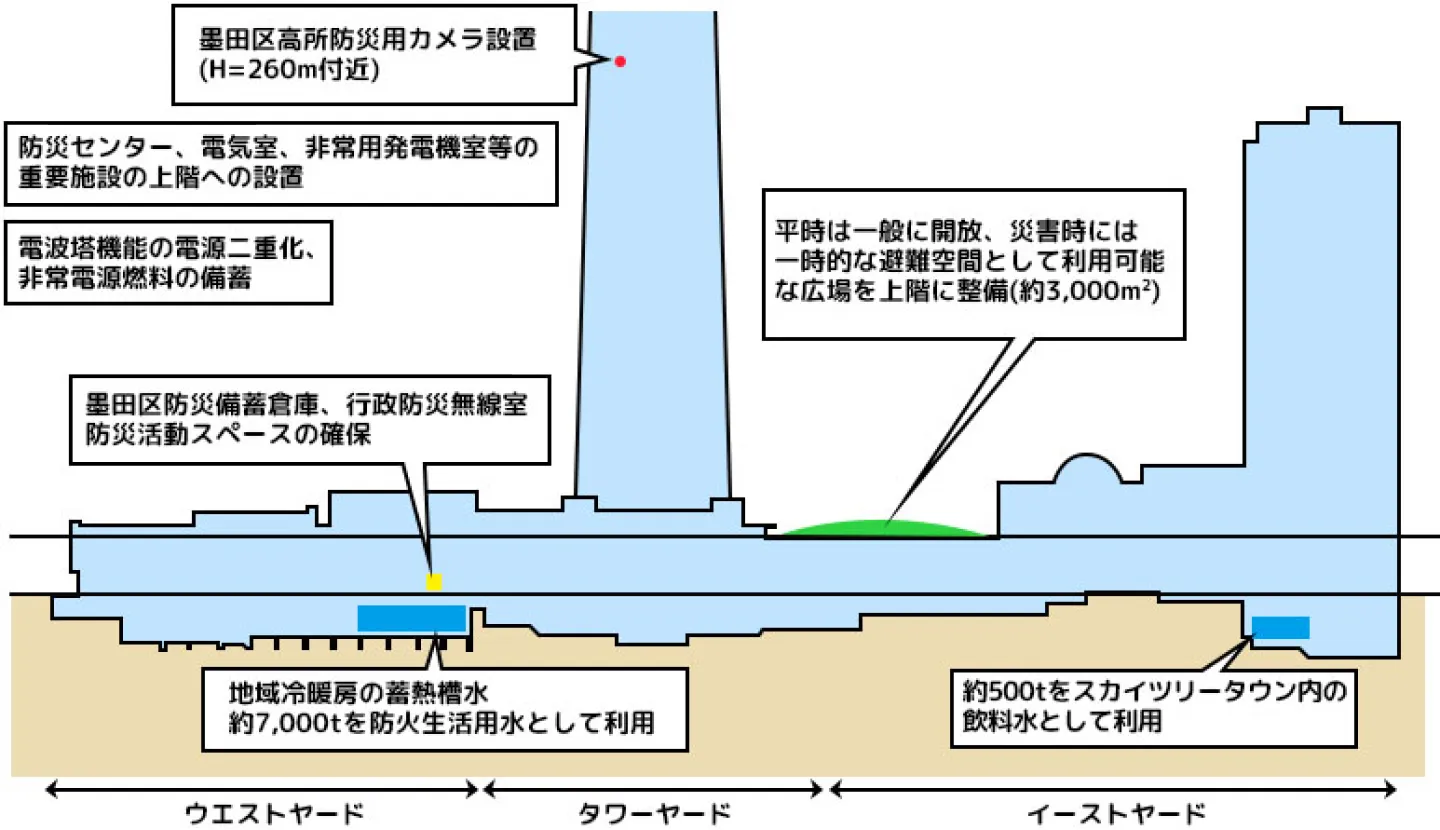
The structure of TOKYO SKYTREE itself is resistant to disasters.
Role as an observation facility
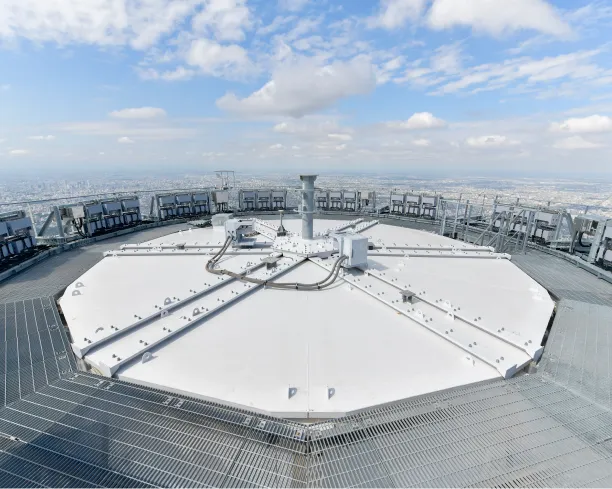
Top lightning rod (634-meter section)
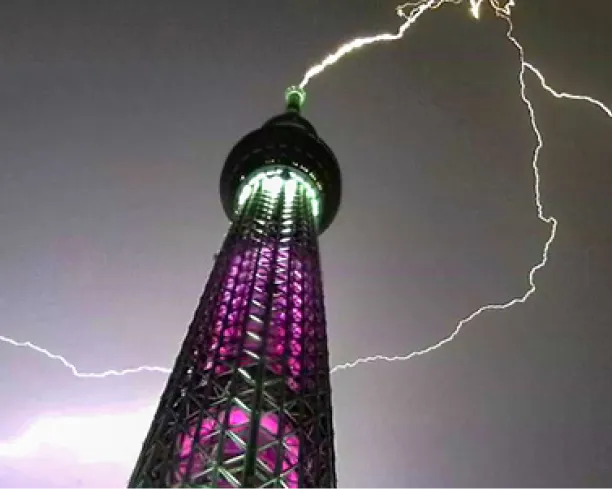
Image of lightning striking the top lightning rod.
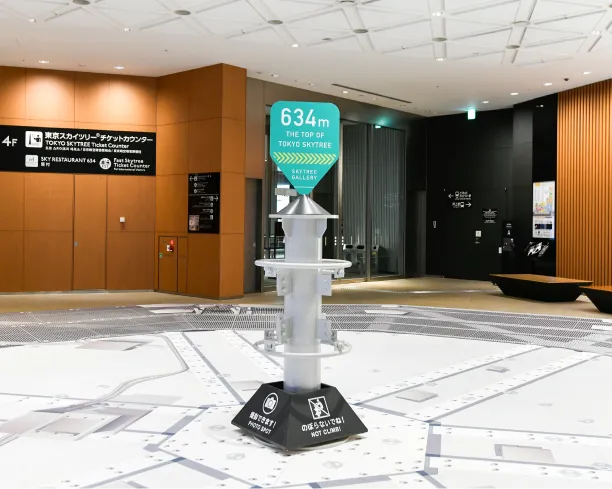
At the Skytree Gallery on the 1st floor, you can see a life-size replica of the lightning rod installed at the top of the TOKYO SKYTREE, 634 meters high!
Environmental Considerations
-
Environmentally friendly ways to use electricity
The lighting at TOKYO SKYTREE is all- LED to save energy.
LED are more energy-efficient and longer-lasting than traditional light bulbs and fluorescent lamps. Using LED lighting fixtures allows for greater energy savings compared to conventional light bulbs and fluorescent lamps.
In addition, solar panels have been installed in two locations within TOKYO SKYTREE TOWN, and the environmentally friendly electricity generated is used within the facility. -
Environmentally friendly and efficient use of water
At TOKYO SKYTREE TOWN, there are approximately 60 underground rainwater tanks (rainwater storage tanks) with a total capacity of 2,635 tons. Of these, 800 tons are used as rainwater storage tanks for flushing toilets and watering rooftop greenery, thus avoiding the wasteful use of tap water.
The remaining 1,835 tons will serve as a rainwater retention tank, temporarily storing rainwater during torrential downpours to prevent TOKYO SKYTREE TOWN and its surrounding areas from flooding. -
Environmentally friendly heating and cooling
TOKYO SKYTREE TOWN uses a district heating and cooling system for its heating and cooling needs.
This system uses one or more "plants" to produce chilled and hot water, which is then piped to several buildings for cooling and heating. Using a district heating and cooling system for cooling and heating is more environmentally friendly and energy-efficient than having each building cool and heat independently. This particular district system has achieved some of the highest energy savings in the country, reducing CO2 emissions by an additional 2,567 tons compared to the national average for district heating and cooling systems (2016 figures).
Furthermore, this region is the first in Japan to introduce a geothermal energy utilization system that effectively uses heat from the ground, thus making use of previously untapped energy.
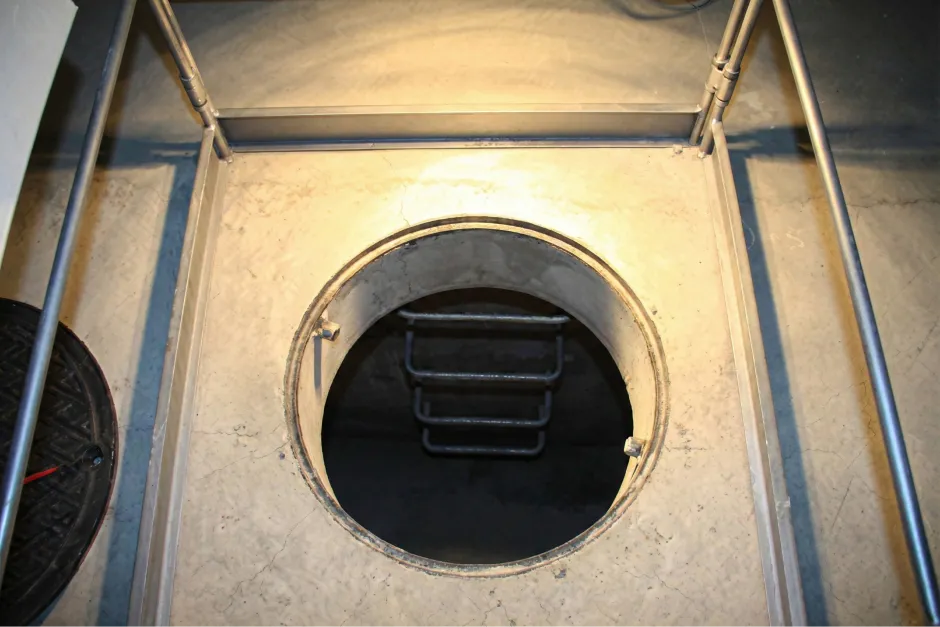
Rainwater tank (rainwater storage tank with hatch open)
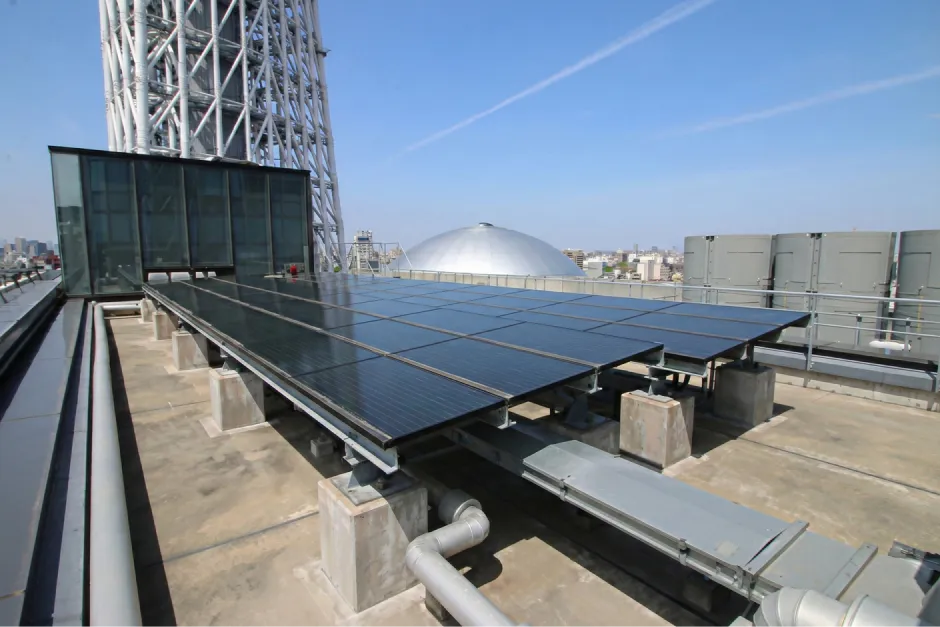
Lifetime power generation panels
- [ 1 ] The birth of TOKYO SKYTREE
-
- Construction of TOKYO SKYTREE
- "The city with a Tower"TOKYO SKYTREE TOWN
- The location where TOKYO SKYTREE stands
- The name of TOKYO SKYTREE
- For our international customers
- [ 2 ] A guide to the different parts of TOKYO SKYTREE
-
- Elevator at TOKYO SKYTREE
- TOKYO SKYTREE lighting
- Design of TOKYO SKYTREE
- [ 3 ] A structural introduction to TOKYO SKYTREE
-
- First, start with research into unknown areas
- A connection to the ground, like a large tree
- A clever design for connecting and integrating Steel framework.
- Overview of the Steel framework framed tower
- [ 4 ] The structure of the tower
-
- The tower is made up of approximately 37,000 pieces
- Mechanism to reduce vibration
- [ 1 ] The role of TOKYO SKYTREE
-
- Decision on a height of 634 meters
- Role as a Broadcasting Tower
- Role as an observation facility
- [ 2 ] Role during disasters
-
- It will continue to function as a radio tower even in the event of a major disaster
- The structure of TOKYO SKYTREE itself is resistant to disasters.
- Environmental Considerations